Phase 1: Rescue
Establish immediate safety and regulation. Interrupt the survival response. Stabilize the nervous system so that thinking, connection, and care are possible again.

/
The Gap Nobody Talks About
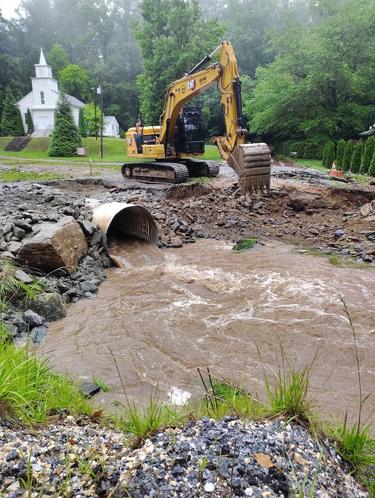
When disaster strikes - a hurricane, a wildfire, a mass casualty event, a community in collapse - we mobilize fast. Emergency responders rush in. Food and water arrive. Shelter is secured. The visible, urgent needs get met.
But then comes the gap.
The disaster is over. The cameras leave. The donated casseroles stop arriving. And yet the people who lived through it - survivors, volunteers, first responders, community leaders - are still inside it. Their bodies are still braced for impact. Their nervous systems are still running on red alert. Their minds are still replaying what they saw, heard, and couldn’t fix.
This is where most trauma recovery systems fail.
The Chrysalis Alliance exists to close that gap.
What Trauma Recovery Actually Is
Trauma recovery is not simply “getting over it.”
It is not the passage of time.
It is not a motivational speech or a crisis hotline number.
Trauma recovery is the active, deliberate process of restoring safety to the body, clarity to the mind, and wholeness to the spirit - so that a person can re-engage with life, relationships, and purpose without being controlled by what happened to them.
True trauma recovery works across three inseparable dimensions:
MENTAL RECOVERY
Restoring clarity, decision-making capacity, and cognitive function
Trauma hijacks the brain. The prefrontal cortex - the seat of reason, planning, and judgment - goes offline under threat. What remains is a survival system running on autopilot: hypervigilance, reactivity, dissociation, and intrusive memory.
Mental recovery means re-engaging the thinking brain. It means helping people distinguish between a real threat and a perceived one, move through crisis decisions without paralysis, and eventually integrate what happened into a coherent, meaningful narrative - without being overwhelmed by it.
For front line workers, this is mission-critical. A team that cannot think clearly in the field is a team at risk - and so are the people they serve.
For those impacted by disaster, mental recovery means the difference between being able to engage with resources and support, and remaining immobilized.
EMOTIONAL RECOVERY
Restoring regulation, connection, and resilience
The emotional body holds what the mind tries to outrun. Grief, rage, helplessness, guilt, compassion fatigue - these are not weaknesses. They are the residue of caring deeply in the face of overwhelming circumstances.
Emotional recovery is the process of learning to feel what arose in crisis without being overtaken by it. It means developing the capacity to regulate the nervous system in real time - to move from flood to flow, from shutdown to presence.
It also means rebuilding the relational tissue that trauma tears apart. Disaster fractures community. Emotional recovery rebuilds it.
SPIRITUAL RECOVERY
Restoring meaning, identity, and the sense that life is worth living
Disaster doesn’t just damage bodies and buildings. It shatters worldviews.
“Why did this happen?”
“Where was God?”
“What do I do with what I saw?”
“How do I go home and pretend things are normal?”
These are spiritual questions. And they don’t get answered by logistics or clinical protocol alone.
Spiritual recovery is the process of reclaiming meaning in the aftermath of meaninglessness. It honors grief as sacred. It creates space for the questions that can’t be answered quickly. It invites transformation - not just coping - as the outcome of survival.
For many front line workers and survivors, this dimension of recovery is the most neglected and the most necessary.
Why Real-Time Matters:
Closing the Gap Between Disaster and Recovery
Here is what the research - and 25 years of field experience - makes unmistakably clear:
The sooner trauma recovery begins, the less damage it leaves behind.
Every day a nervous system stays in survival mode without tools, support, and grounding, the neural pathways of trauma become more entrenched. What begins as a stress response becomes a pattern. What begins as a pattern can become a disorder.
This is not a personal failing. It is biology.
The human nervous system was designed to return to equilibrium after threat. But modern disasters are not brief. They are prolonged, compounded, and come with secondary crises: loss of home, income, community, identity. The natural recovery cycle gets interrupted - over and over again.
Real-time trauma recovery intervenes before those interruptions calcify into chronic dysfunction.
It does not wait for a therapist’s appointment three months out. It does not assume survivors have the luxury of time. It does not send front line workers home without tools to process what they just witnessed.
It meets people where they are - in the field, in the tent, in the break room - and gives them something they can use right now.
What the Research Tells Us
The case for real-time, integrated trauma recovery is not theoretical. It is grounded in decades of trauma science, neuroscience, and disaster response research.
The Neuroscience of Early Intervention
Research consistently shows that early psychological intervention - within hours to days of a traumatic event - significantly reduces the risk of developing PTSD.
Studies published in the Journal of Traumatic Stress and by the National Institute of Mental Health confirm that trauma responses are most malleable in the acute phase. The window immediately following a crisis event is the highest-leverage moment for intervention.
The Body Keeps the Score
Dr. Bessel van der Kolk’s foundational research established that trauma is not stored in memory alone - it is stored in the body.
Recovery programs that address only cognition while ignoring somatic and emotional responses leave the trauma partially unprocessed.
Full recovery requires whole-person tools: physical regulation, emotional processing, and meaning-making.
Polyvagal Theory and
Nervous System Regulation
Dr. Stephen Porges’ Polyvagal Theory demonstrates that social safety and co-regulation are neurobiological necessities - not luxuries - for trauma recovery.
Tools that activate the parasympathetic nervous system (controlled breathing, grounding techniques, social connection) are not “soft skills.” They are evidence-based interventions with measurable physiological impact.
Compassion Fatigue and
Secondary Traumatic Stress
Research by Dr. Charles Figley and Dr. Françoise Mathieu documents the cumulative toll on helping professionals who absorb trauma without recovery tools.
Organizations that fail to address secondary traumatic stress see higher burnout, higher turnover, and significantly reduced effectiveness in the field. Real-time recovery tools are not just good for workers - they protect the mission.
EMDR and Flash Technique
Eye Movement Desensitization and Reprocessing (EMDR), now recognized by the World Health Organization as a first-line treatment for PTSD, has been adapted into field-ready approaches - including the EMDR Flash Technique - that allow trauma processing to begin without requiring sustained distress activation.
This makes real-time, low-intensity trauma processing possible even in active disaster environments.
FEMA and NVOAD Alignment
The Trauma Recovery Certification Program® is built to align with FEMA’s and NVOAD’s (National Voluntary Organizations Active in Disaster) frameworks for disaster mental, emotional, and spiritual response.
This means the real-time tools taught through The Chrysalis Alliance fit directly into existing organizational infrastructure for disaster response.
Our Four-Phase Framework
The Chrysalis Alliance approach to trauma recovery follows a clear, repeatable methodology that moves people - and organizations - through every stage of recovery:
- Phase 2: Recovery
Build capacity and begin gentle processing. Restore daily functioning. Develop tools for emotional regulation, decision-making under stress, and sustainable service.
- Phase 3: Reconstruction
Shift patterns, make meaning, and reclaim agency. Address the deeper disruptions disaster creates in identity, belief, and relationship. Begin to rebuild - internally and externally.
- Phase 4: Evolution
Integrate transformation into leadership, relationships, and daily life. Move from survival to wholeness. Not just back to who you were - but forward into who you are becoming.
Who This Is For
The Chrysalis Alliance serves the people who show up when everyone else is overwhelmed:
- Disaster response and recovery organizations whose teams absorb trauma in the field
- Long-term recovery groups (LTRGs) working with communities months and years after the cameras leave
- Faith-based and volunteer networks and churches whose members serve without professional training
- Businesses and employers serving traumatized workforces and communities
- Front line workers - chaplains, case workers, emergency managers, community navigators - who carry survivors’ pain alongside their own
The Chrysalis Alliance Difference
Most trauma training teaches what trauma is.
We teach what to do - in real time, in the field, with the person in front of you.
Our tools are not theoretical. They are repeatable, ethical, evidence-informed, and designed for the messy reality of disaster work: time pressure, resource constraints, emotional depletion, and the relentless human need to help.
We believe that recovery is not a luxury reserved for when the disaster is over.
Recovery begins now. And the sooner it begins, the further it can go.
Ready to Equip Your Team?
Whether you’re a disaster response organization, a nonprofit, a faith community, or a business serving people in crisis - The Chrysalis Alliance has a path forward for you.
✓501(c)3 registered nonprofit | EIN: 42-1834781
✓Founded by Emma M. Churchman LLC | Gerton, NC
✓Aligned with FEMA national disaster management standards
✓ Aligned with NVOAD emotional and spiritual care guidelines
___MESSAGE___
___MESSAGE___